



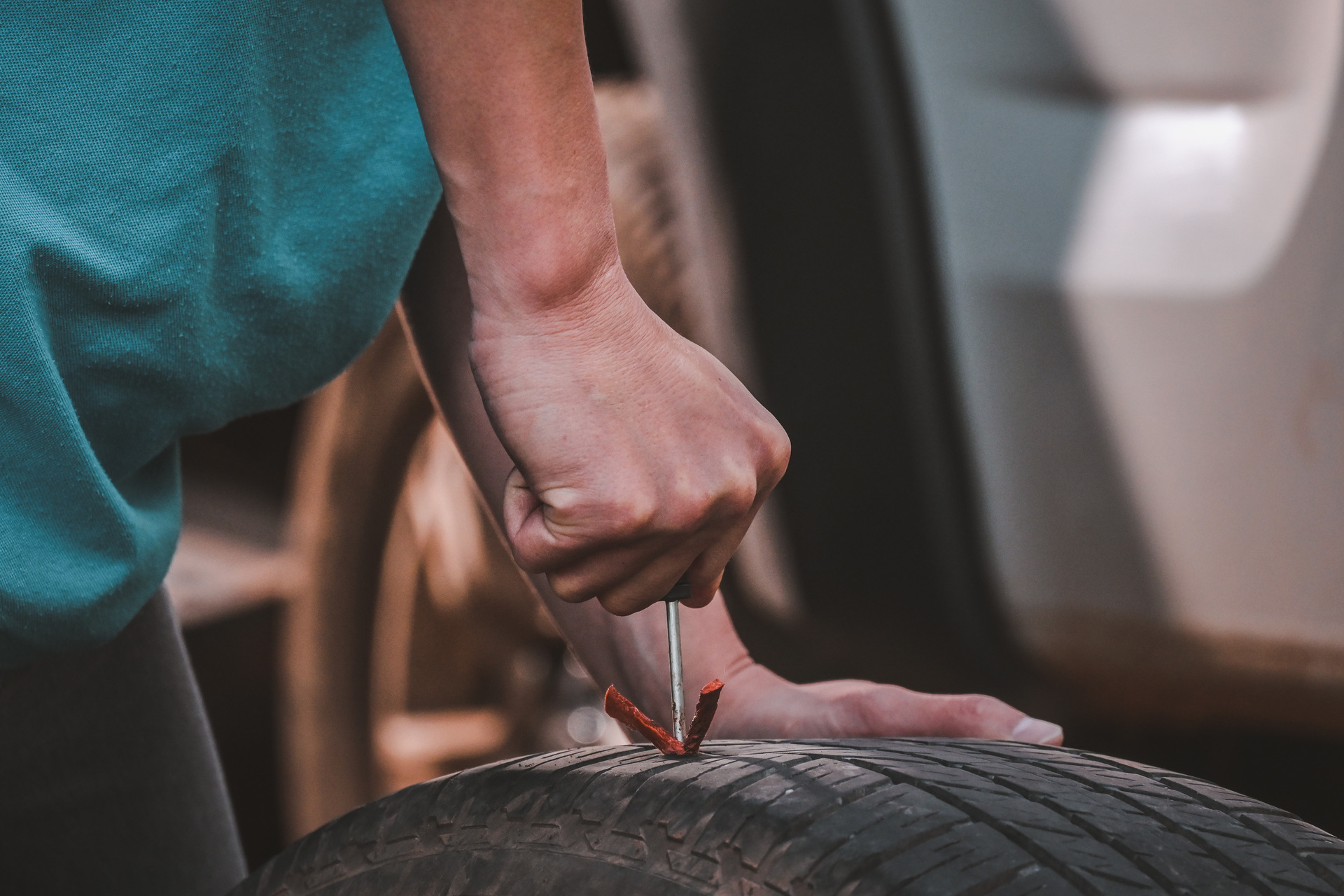
A slow leaking tire might not seem like a big deal—until it leaves you stranded or throws off your vehicle’s handling. Whether it’s a pesky nail, a worn valve stem, or just time catching up with your tires, knowing how to spot and fix a slow leak can save you time, money, and frustration. In this complete 2025 guide, we’ll walk you through everything you need to know—from identifying the source of the leak to safely repairing it yourself or knowing when it’s time to see a professional. And if you’re ever in doubt, the expert team at Phillips Buick GMC is here to help. Visit us or give us a call for trusted service that keeps you moving.
Step 1 – Inflate and Inspect the Tire Visually
The first step to fixing a slow leaking tire is simple but important: inflate and inspect. Before you jump into a full repair, take a few minutes to look closely. A quick visual check can help you find the leak before it gets worse.
Start by inflating your tire to the pressure level shown on the inside of your car’s door frame or in your owner’s manual. This helps bring the tire back to its proper shape, which makes spotting the leak easier.
What to Look For
Once the tire is full, take a slow walk around it. Look at every part of the rubber. Use a flashlight if needed.
Watch for:
- Cracks or cuts
- Small nails, screws, or sharp objects
- Air bubbles or odd bulges
- Wet spots that might mean a leak
- Worn areas near the sidewall
You might notice something lodged in the tire that’s hard to see when it’s flat. If you’re driving a vehicle like the Sierra 1500, Buick Envision, or Acadia, low tire pressure can hurt both safety and fuel use. That’s why this early step is key.
Quick Tips for Easy Tire Checks
| What To Do | Why It Helps |
| Inflate the tire first | Helps bring the tire back to shape |
| Use a flashlight | Makes small leaks easier to spot |
| Check sidewalls and tread | Leaks can hide in either spot |
| Listen for a hissing sound | May lead you straight to the leak |
This slow leak tire guide is built to save you time. Whether you’re trying to fix a car tire leak at home or you plan to bring it in for help, a full visual check helps you take the right next step. If you’re unsure or see damage, our team at Phillips Buick GMC is ready to help. From basic tire repair in 2025 to support for models like the Envista or Buick Envision, we’ll get you back on the road with peace of mind.
Step 2 – Use the Soap and Water Test to Spot the Leak
If you’ve looked over the tire but still can’t find where it’s leaking, don’t worry. The soap and water test is a trusted step in any slow leak tire guide. It’s quick, cheap, and works well. You’ll find leaks that are too small to see with the eye alone.
Start by mixing a bit of dish soap with water. Use about one tablespoon of soap per cup of water. Pour the mix into a spray bottle if you have one. If not, a cloth or sponge will work just fine.
How to Do the Soap and Water Test
Spray or wipe the soapy mix over the tire, making sure to cover:
- The tread (the part that touches the road)
- The sidewalls
- Around the air valve
- The edge where the tire meets the rim
Watch for bubbles. If air is leaking out, the soap mix will foam or bubble up. The bubbles may grow or even pop from the pressure of the air leak. That’s your sign you’ve found the spot.
Use This Table to Track What You Check
| Area to Check | What to Look For |
| Tire tread | Small bubbles or foam |
| Tire sidewall | Tiny leaks or thin bubbles |
| Air valve stem | Leaks at the base or top |
| Rim and bead edge | Leaks between rim and rubber |
This simple step can help fix a slow leaking tire before it becomes a flat. Whether you drive a Buick Envision for work or a Sierra 1500 for travel, this test keeps you safe and saves you time.
If bubbles show and you’re unsure what to do next, you’re not alone. Tire repair in 2025 doesn’t have to be hard. Bring your vehicle to Phillips Buick GMC and let us help you fix the car tire leak right the first time—whether it’s a compact Envista or a full-size Acadia, our team has you covered.
Step 3 – Check the Valve Stem for Leaks or Damage
The valve stem is a small part, but it plays a big role in holding air. If your tire has a slow leak, this is one of the most common spots to check. This step is a key part of any slow leak tire guide.
Start by removing the valve cap. Then, take a close look at the stem. It should be firm, clean, and straight. If it looks cracked or dry, it may be the cause of your leak.
To test for air loss, use the soap and water mix from Step 2.
Follow These Quick Steps
- Remove the cap from the valve stem
- Spray or dab soap mix on the valve
- Look for bubbles around the top and base
- Watch for slow, steady foaming
If you see bubbles, air is escaping. Even a small leak here can make it hard to keep the tire full. You may notice this more if you drive often or cover long miles—like in a Sierra 1500, Buick Envision, or Acadia.
If there’s no soap mix handy, press lightly on the valve with a tool or key. If air comes out right away without pressure, the valve may be worn or loose.
Signs Your Valve Stem May Be Bad
| Sign | What It Means |
| Cracked rubber | Stem has aged or dried out |
| Bent or loose stem | May not seal the air inside |
| Bubbles during test | Leak is coming from the valve |
| Tire won’t hold pressure | Air is escaping even after fill-up |
In some cases, the stem can be tightened or replaced without taking off the tire. This makes it a quick fix for anyone looking to fix a slow leaking tire with little time or cost.
With tire repair in 2025, tools and know-how are more accessible than ever. But if you’re not sure or want it done right, stop by Phillips Buick GMC. From the sporty Envista to the capable Sierra 1500, our team is here to help fix any car tire leak with care.
Step 4 – Inspect the Tire Bead and Rim Area
The tire bead is where the rubber meets the rim. It seals the air inside the tire. A bad seal here can lead to slow leaks. If you’re trying to fix a slow leaking tire, this is a must-check area.
Start by taking a good look at where the tire meets the wheel. If you see dirt, rust, or bent spots, these could be the cause.
Water, salt, or time can weaken the seal. This is common in both older cars and newer ones—whether you’re driving a Sierra 1500, Buick Envision, or Acadia.
What to Look For:
- Dirt packed between the rim and tire
- Small cracks in the rubber around the bead
- Rust or nicks on the rim edge
- Bubbling if you spray soapy water here
If you spot bubbles, you’ve likely found the leak. This part of the slow leak tire guide is often missed, but it’s key for long-term fixes.
Rim and Bead Problems Can Come From:
| Cause | What to Check |
| Curb damage | Look for bent or rough rim edges |
| Old sealant | May need to be cleaned or removed |
| Rust or dirt | Clean the area and re-seat the bead |
| Extreme cold | Rubber can shrink and lose the seal |
Fixing a car tire leak at the rim may need pro help. Some tires must be removed, cleaned, and reseated with care. That’s where trusted tire repair 2025 services—like those at Phillips Buick GMC—can make the job simple and safe.
Whether you’re driving an Envista for city trips or hauling gear in a Sierra 1500, a solid seal at the rim means peace of mind. Don’t let a bead leak slow you down.
Step 5 – Try Submerging the Tire in Water
If the leak is still hard to find, it’s time for full submersion. This step helps spot even the smallest leak. It’s one of the best tips in any slow leak tire guide.
Fill a large tub or container with clean water. You’ll need enough to cover the full tire. If the tire is still on the car, remove it before this step.
Carefully lower the tire into the water. Move slowly. Watch for bubbles. Air escaping from the tire will form small, steady streams.
What You’ll Need:
- Large tub or bin (big enough for the tire)
- Water (deep enough to cover the full tire)
- Towels or a dry rag
Where to Watch for Bubbles:
| Area to Check | Common Issues |
| Tread surface | Nails, screws, or small holes |
| Sidewalls | Tiny cracks or weak spots |
| Bead (rim edge) | Poor seal or dirt |
| Valve stem | Cracks or loose core |
Turn the tire slowly in the water. If you see bubbles, note the spot. That’s where the air is leaking out. Mark the area with chalk or tape once the tire is dry.
Submersion is an easy step, even for those who have never tried to fix a car tire leak. It’s useful for both newer and older models—whether you drive a Buick Envision, Envista, or Acadia.
If you’re still unsure how to fix a slow leaking tire, or if bubbles show up in more than one place, it might be time to let a pro handle it. A trusted tire repair 2025 expert at Phillips Buick GMC can help you find the safest and most lasting fix.
Step 6 – Remove Any Foreign Objects Safely
If you’ve found the leak, the next step is to check for any object stuck in the tire. This could be a nail, screw, or sharp rock. Removing it must be done with care to avoid more damage.
You should only remove the object after you’re ready to patch or plug the hole. If you remove it too soon, the tire could deflate fast.
What to Look For:
| Object Type | Common Risk |
| Nail or screw | Small but deep puncture |
| Glass shard | Sharp edge, may cause slicing |
| Rock or gravel | Wedge in the tread, may widen hole |
Use these tools to help:
- Pliers (needle-nose works best)
- Work gloves (to protect your hands)
- Chalk or marker (to mark the area)
Steps to Follow:
- Make sure the tire is off the vehicle or fully supported.
- Wear gloves to protect your hands.
- Use pliers to grip and pull the object straight out.
- Once it’s out, listen for air. A hissing sound means you’ll need to plug it right away.
- Mark the hole if you haven’t already. You’ll need to patch or plug it soon.
This part of the process is key if you want to fix a slow leaking tire on your own. Whether you’re driving a Buick Envision, Envista, Acadia, or Sierra 1500, knowing how to fix a car tire leak gives you peace of mind.
Still not sure what to do next? The tire repair 2025 experts at Phillips Buick GMC are happy to take a look and help you get back on the road.
Step 7 – Plug the Tire or Use a Sealant
Once the hole is clean and marked, it’s time to seal it. You have two good choices: plug the hole or use a tire sealant. Each method works well, but the right one depends on the size and place of the leak.
A plug works best for small holes in the tread. A sealant may help if the leak is hard to reach or if you’re in a rush.
When to Use a Plug:
| Best For | Plug Type to Use |
| Small holes in the tread | Rubber plug kit |
| Clean and round punctures | Mushroom-style plug |
Steps to Plug the Tire:
- Use a reamer tool to clean the hole.
- Coat the plug with rubber cement if needed.
- Push the plug in with the tool and twist to lock it.
- Trim the extra rubber that sticks out.
Let it set for a few minutes before you drive.
When to Use a Tire Sealant:
| Sealant Type | Best Use Case |
| Aerosol can sealant | Quick fixes and roadside emergencies |
| Liquid sealant (pour-in) | Slow leaks you can’t see or reach |
Steps to Use Sealant:
- Shake the can well.
- Attach the hose to the valve stem.
- Spray the full can into the tire.
- Drive for a few miles so it spreads and seals the leak.
Important Tip: Sealants are often a short-term fix. It’s best to follow up with a full repair.
Whether you’re driving a Buick Envision, Envista, Acadia, or Sierra 1500, knowing how to fix a slow leaking tire helps you stay safe on the road. A trusted slow leak tire guide like this one can be your go-to tool for tire repair in 2025.
Need help sealing the deal? The expert team at Phillips Buick GMC is always here to help fix your car tire leak fast and right.
Step 8 – Reinflate the Tire and Check Pressure
Once the leak is sealed, it’s time to add air back to the tire. This step is simple but key. A tire that’s too soft won’t grip the road. A tire with too much air can wear out fast.
Use a tire gauge you trust. Add air in short bursts, then check again.
How to Reinflate Your Tire:
- Find your car’s proper PSI. It’s often on a sticker inside the driver’s door.
- Use an air pump or visit a nearby gas station.
- Add air a little at a time.
- Check the pressure with your gauge.
- Stop when the PSI matches the listed number.
This step is vital for any slow leak tire guide. A good seal means little without the right pressure. Even small leaks in vehicles like the Acadia, Envista, or Sierra 1500 can lead to low PSI fast.
If you’ve followed all the steps in this tire repair 2025 guide, your tire should now be safe to use. But it’s still smart to check pressure again after a short drive. If the air drops, the leak may need more care.
Keeping your tires at the right PSI helps:
- Improve fuel use
- Extend tire life
- Boost safety
- Help ride feel steady and smooth
From the Buick Envision to a Sierra 1500, all vehicles need the right tire care. This step helps fix a slow leaking tire and keeps you on the road with peace of mind. If pressure still drops, reach out to a local tire expert to fix your car tire leak for good.
Step 9 – Monitor Tire Pressure Over the Next Few Days
Even after a fix, tire leaks can come back. That’s why it’s smart to check the pressure each day. This step helps you make sure the leak is gone for good.
A drop in PSI can mean the fix didn’t hold. It can also point to a new leak. Either way, the sooner you catch it, the better.
Easy Tips to Track Tire Pressure:
- Check each day at the same time, before you drive
- Use a gauge you trust
- Keep a log of the PSI for a few days
- Look for signs of pressure loss over time
This step is key to a good slow leak tire guide. It helps drivers of all types of vehicles—like the Buick Envision, Envista, Acadia, or Sierra 1500—know when their tire is truly road-ready.
If you see more pressure loss:
- Recheck for small leaks using soap and water
- Inspect the valve and bead area again
- Make sure the sealant or plug still holds
- Visit a tire shop for help if needed
A tire that holds pressure for several days is a good sign. It shows the fix worked. But keep in mind that weather, road heat, and long drives can all change PSI too. This step in the tire repair 2025 checklist gives you peace of mind and helps ensure you fully fix a slow leaking tire.
If you still need help to fix your car tire leak, a trained shop can take the next step.
What are the usual causes of a slow tire leak (nail, valve stem, rim seal)?
The most common causes of a slow tire leak are:
- A small object like a nail or screw stuck in the tread
- A damaged or loose valve stem
- Poor seal where the tire meets the rim (rim seal)
- Cracks or dry rot in the rubber
- Corrosion on the wheel where the bead meets the rim
How do I locate the source of the leak effectively?
To find a slow leak, spray the tire with a soap and water mix and watch for bubbles. Focus on the tread, valve stem, and bead area near the rim.
Can tire sealants be a permanent solution, or should I visit a tire shop for repairs?
Tire sealants are a short-term fix. For a safe and long-lasting repair, visit a tire shop and have the tire patched or plugged professionally.
Get Your Tire or Vehicle Repaired at Phillips Buick GMC
Knowing how to deal with a slow leak in your tire can help keep your car safe and ready to drive. If you still have questions or need help, the team at Phillips Buick GMC is here to assist you.
We invite drivers near Leesburg to visit our store or contact us for more support. Whether you’re looking to repair your vehicle or shop for something new, we have you covered.
At Phillips Buick GMC, you’ll find a wide range of reliable options, including the Sierra 1500, Buick Envision, Envista, and Acadia. These vehicles are ready for work, family trips, or daily drives. Check out our current inventory online today.
Still exploring car care tips? You can also learn how to fix paint peeling, repair a car’s power outlet, or why EV charging can take time. If you’re looking to take care of a slow tire leak the right way, we also offer step-by-step help to guide you.
From DIY repairs to expert advice, we’re proud to be your trusted source for all things auto in Central Florida.
Disclaimer: All information is provided for general informational and entertainment purposes only. While we strive for accuracy, we cannot guarantee that all content is complete, current, or error-free. Any reliance you place on such information is strictly at your own risk. This article may include opinions and is not endorsed by, or officially affiliated with, any vehicle manufacturer or brand. Always consult official sources – such as the vehicle’s owner’s manual, authorized dealerships, or certified professionals – for the most up-to-date and personalized information.
Connect with us


Recent Blog Entries
- 2026 GMC Terrain in Fruitland Park, FL — Trims, Features & the Phillips Price Promise
- 2026 GMC SUV Lineup: Which GMC SUV Is Right for You? Terrain vs. Acadia vs. Yukon
- 2026 Buick Enclave Review — Your Perfect Companion for Life in The Villages, FL
- GMC AT4 vs. Elevation: Which GMC Truck Trim Is Right for You?
- Phillips Transparency Pricing – No Hidden Fees | Price Match Guarantee
