



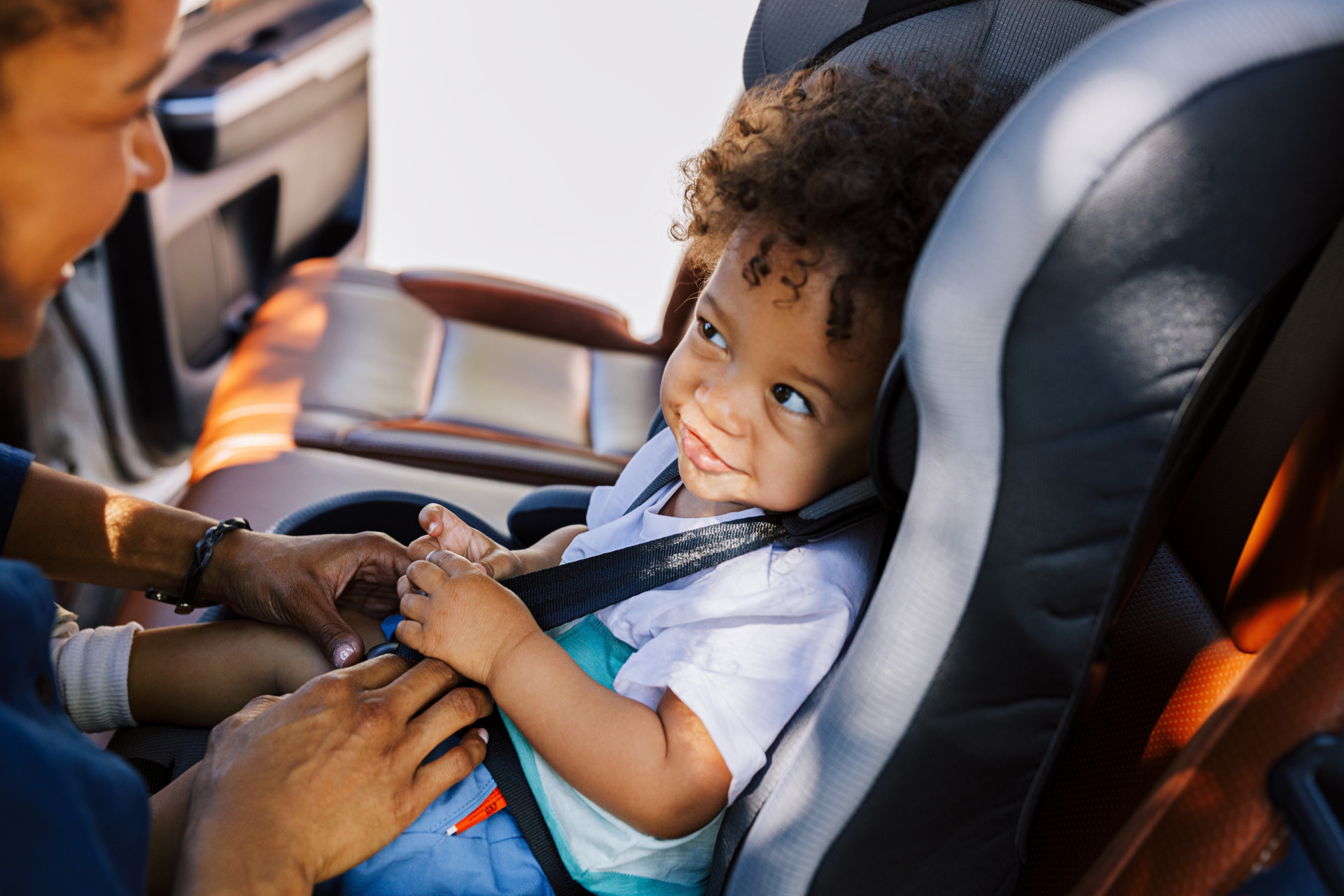
When it comes to keeping your child safe on the road, there’s no room for shortcuts—especially when it comes to car seat straps. Uneven harnesses or twisted seat belts can turn everyday drives around Orlando, Claremont, Winter Garden, or Groveland into potential safety risks. Whether you’re buckling up your toddler in a GMC Sierra 1500 or settling your baby into the backseat of a Buick Enclave, properly aligned straps make all the difference.
Misaligned or twisted straps can reduce the effectiveness of your car seat during sudden stops or impacts. That’s why knowing how to adjust uneven car seat straps isn’t just a parenting tip—it’s a must-have skill for every driver. At Phillips Buick GMC, we care about more than just the vehicle you drive; we care about how safely your family rides. If you’re unsure about your car seat setup or want expert guidance tailored to your Buick or GMC model, don’t hesitate to stop by or contact our team.
1. Take your child out of the seat
Before you begin to fix any strap issue, the first step is simple: take your child out of the car seat. This may seem obvious, but it’s one of the most overlooked steps when trying to adjust uneven car seat straps.
When your child is still in the seat, the straps are stretched and under pressure. That makes it hard to see what’s going wrong. Even more, it can lead to poor fixes that don’t last. Removing your child gives you full access to the harness and allows you to check the straps for twists, slack, or misalignment.
Here’s why clear access matters:
- You can spot if the strap is twisted or stuck under the seat.
- You can gently pull each strap to check for trapped fabric.
- You have room to fully loosen the harness for a full reset.
Whether you’re working inside a GMC Acadia, Buick Envision, or even a Sierra 1500, space can be tight. Removing your child lets you work with more room, especially in smaller second rows or behind the driver’s seat.
Once the seat is clear, follow these quick tips:
- Pull both harness straps outward and upward
- Check both sides for even length and tension
- Look closely at the back of the seat for slack that may be trapped
This small step lays the groundwork for a proper seat strap reposition. It’s also the first move in any reliable car seat strap guide.
Skipping this step can lead to poor results when trying to fix seat belt alignment. For families in Claremont or Winter Garden, where quick trips are common, fast fixes often miss key steps. Don’t rush—start smart.
Making the time to reset your straps the right way is how you keep your Enclave or Envision as safe as it is stylish.
2. Locate the adjustment mechanism
Once your child is safely out of the seat, it’s time to find the adjustment point. This part controls how tight or loose the harness straps are. To properly adjust uneven car seat straps, you need to know where this mechanism is and how it works.
Most car seats have the strap adjuster in one of three places:
- Front of the seat: Usually under a small flap between your child’s legs
- Back of the seat: Near where the harness feeds through the seat shell
- Under the seat pad: Some models hide the mechanism under the fabric
You may need to move cushions or flaps to reach the mechanism. That’s normal. In a roomy SUV like the Buick Enclave or GMC Acadia, you’ll have more space to do this. Compact models like the Envision may need a little more care when reaching in tight spots.
Once you find it, look for these features:
- A button, lever, or pull tab
- A visible strap feed for both left and right harness straps
- A solid click or hold when pulled or pressed
This is where you’ll start to fix seat belt alignment and reset the balance between the two sides. If the straps are not moving evenly, the problem might be right here.
A good car seat strap guide will show you how your brand’s system works. But most work in a similar way: press the adjuster and pull the straps out to loosen them.
Tip: If you’re working in the back of a Sierra 1500, fold the seat up for more space. This gives you better reach for seats installed in the middle row.
Finding and using the adjustment mechanism is one of the best ways to reposition seat straps quickly. It’s also the key to long-term fixes—not just a one-time patch.
3. Fully loosen the harness
Once you’ve found the adjustment point, the next step is to fully loosen the harness. This makes it easier to spot problems and reposition seat straps the right way. Tight straps can hide slack, twists, or uneven pulls that cause issues during daily use.
To adjust uneven car seat straps correctly, start with a clean slate. That means zero tension.
Follow these simple steps:
- Press or lift the adjuster lever or button.
- While pressing, pull both shoulder straps forward—gently but firmly.
- Keep pulling until the harness feels fully loose and moves without drag.
This gives you full range to work with the straps. You’ll now be able to check the harness path and make sure nothing is stuck or out of place.
Many families around Orlando and nearby towns like Winter Garden or Groveland prefer roomy vehicles like the Acadia or Enclave. These models make it easier to move around while working on car seats. But even in the more compact Envision, fully loosening the harness gives you enough space to fix seat belt alignment with ease.
Remember:
- Both straps should move freely.
- You should be able to lift each one without strain.
- The harness should sit evenly on both sides.
If you still feel resistance after loosening the harness, check under the seat. Some slack might be trapped behind the padding or near the buckle. A good car seat strap guide will show you exactly where to look.
This step makes the rest of the process smoother. It’s a small move with a big impact—and it sets you up for a safer, more even fit whether you drive a Sierra 1500 or a daily-use SUV.
4. Check for slack trapped behind the seat
Even when the harness looks loose, hidden slack can stop you from getting a snug, safe fit. One of the most common issues when trying to adjust uneven car seat straps is slack hiding behind or under the seat padding. This slack makes one side tighter than the other, even if you’ve already loosened the harness.
Here’s how to check for trapped slack:
- Reach behind the car seat, where the straps feed through.
- Gently pull the straps from the back to remove any bunching.
- Check near the buckle area—slack often gets caught here.
- Run your fingers under the seat padding and harness path.
When slack is stuck out of sight, it causes the harness to pull unevenly across the child’s chest or shoulders. This makes it harder to fix seat belt alignment and can lead to a poor fit, even if the rest of the seat is set up well.
If you’re driving a larger vehicle like the Acadia, Enclave, or Sierra 1500, you’ll have a bit more room to move around while making these adjustments. In a smaller SUV like the Envision, take extra care to reach fully behind the seat. A compact layout might require you to move the car seat slightly forward for better access.
Look for help in the car seat strap guide included with your seat. Most manuals will show you where slack tends to hide and how to free it.
Once slack is gone, you’ll have a clear path to seat strap reposition success. This step helps make sure both straps tighten the same way—an essential part of keeping your child safe on every drive.
5. Fix seat belt alignment
Fixing seat belt alignment is one of the most important parts of car seat safety. If the belt does not line up right, it won’t protect your child the way it should. The belt must sit flat, snug, and even on both sides. This step helps prevent the need to adjust uneven car seat straps later on.
To fix seat belt alignment, follow these steps:
- Make sure the straps come through the same slot on each side.
- The shoulder straps should sit at or just below your child’s shoulders (rear-facing).
- For forward-facing seats, straps should be at or just above the shoulders.
- The lap part of the belt should rest flat over the hips—not the belly.
Use your car seat strap guide to check each belt path. These diagrams show the right height and slot for your child’s size.
In roomy SUVs like the Acadia or Sierra 1500, it’s easier to crouch and get a close look at the belt angle. Smaller vehicles like the Envision or Enclave may take more patience, but the process is the same.
Check that the belt is not:
- Twisted
- Loose on one side
- Tucked under padding
- Bunched behind the seat
Once you line the belt up right, you can seat strap reposition if needed. If one side still pulls tighter, adjust until both sides move smooth and snug. Keep each ride safe by checking the belt’s fit each time you buckle in.
6. Re-tighten the harness
Once you’ve checked for slack and fixed the seat belt alignment, it’s time to re-tighten the harness. Properly tightening the harness ensures your child is secure and comfortable. Loose straps can reduce the effectiveness of the seat, while overly tight straps can cause discomfort.
Here’s how to re-tighten the harness:
- Pull the harness straps: After you’ve positioned the straps properly, pull the harness adjuster to tighten them. Ensure they fit snugly across your child’s chest and hips.
- Check the snugness: You should be able to fit only one finger between the strap and your child’s chest. If you can fit more, it’s too loose.
- Even the straps: Make sure both shoulder straps are evenly tightened. You want the straps on each side to pull with equal force, without one side being looser than the other.
- Use the car seat strap guide: Follow the manufacturer’s guide to adjust the straps for your child’s specific size. Some models, like the Acadia or Enclave, may have a simple pull-and-tighten system for added convenience.
- Re-check the seat belt: After tightening the harness, check the seat belt for slack and adjust it if necessary. The seat should stay secure and won’t shift around during a ride.
In vehicles like the Sierra 1500 or Envision, ensure that the seat fits properly, as these cars offer more space and different configurations. Even with more room, the process remains the same.
When you re-tighten the harness, you’re ensuring your child’s safety on every trip, no matter where you drive.
How do I diagnose if my seat straps are truly uneven or twisted?
To diagnose uneven or twisted seat straps, fully loosen the harness and inspect the straps for slack or twists. Gently pull each strap to see if one side is longer or shorter than the other. Look for any twists in the straps that could affect alignment.
Can I easily fix seat strap alignment myself or should I see a mechanic?
You can typically fix seat strap alignment yourself by following a few simple steps: loosen the harness, check for slack or twists, and reposition the straps. If the straps are still misaligned after these steps or if you’re unsure about the proper adjustments, it may be a good idea to consult a professional or refer to the car seat’s manual.
Are certain car seat models more prone to strap misalignment?
Yes, some car seat models can be more prone to strap misalignment due to design issues or the way the straps are threaded. Always follow the car seat manufacturer’s instructions for proper installation and adjustments. Regularly checking for alignment can help prevent problems.
Keep You and Your Passengers Safe with Phillips Buick GMC
We hope this guide has helped you understand how to adjust uneven car seat straps and ensure your child’s safety. If you need more help or have any questions, don’t hesitate to contact Phillips Buick GMC. Our expert team is here to assist you, and we invite customers from Orlando, Claremont, Winter Garden, and Groveland to explore our wide selection of vehicles, including the 2025 GMC Acadia, Enclave, Envision, and Sierra 1500. Whether you’re looking for a family-friendly SUV or a powerful truck, we have the perfect vehicle for your needs.
In addition to car seat adjustments, we offer a wealth of useful resources on our site. Check out our recent article on seating capacities in the 2025 GMC lineup to find the best fit for your family. If you’re considering a used truck, be sure to read 10 things to look for and avoid when buying a used truck to make an informed decision. And if you’ve encountered any issues with your GMC, our GMC error response codes guide offers helpful tips on how to fix them.
Connect with us


Recent Blog Entries
- 2026 GMC SUV Lineup: Which GMC SUV Is Right for You? Terrain vs. Acadia vs. Yukon
- 2026 Buick Enclave Review — Your Perfect Companion for Life in The Villages, FL
- GMC AT4 vs. Elevation: Which GMC Truck Trim Is Right for You?
- Phillips Transparency Pricing – No Hidden Fees | Price Match Guarantee
- 2026 Buick Enclave Review — 7 Powerful Reasons It’s the Best SUV for The Villages, FL
